True Love. The very expression, true love, might seem to some like a cliché in today’s society. Dating has become something quite casual and moving on to the next person is as common as Starbucks. The entertainment industry promotes the belief to “follow your heart,” and marriage before sex is considered old fashioned. Yet, how has the new age motto of love impacted relationships? Divorces, a lack of trust and satisfaction are high (CDC, 2022). Many believe that the excitement, arousal, curiosity, and possible ecstasy of first meeting and dating someone are what true love is. These individuals wonder why they don’t feel the way they did when they first met their partner, telling themselves that they must have fallen out of love. Is that what it is, falling out of love? Does that mean that true love is no more than biochemistry?
Tomkins and Sellers (2001) focused on the action of dopamine in drug dependence, as well as the fact that many human behaviors are connected to the same brain reward system that initiates, stimulates, and maintains these very behaviors (e.g., eating, sexual activity, shopping, gambling, dating). Most of us are familiar with the concept of someone who is suffering from a substance-related or addictive disorder, chasing their first high also referred to as “chasing the dragon.” It is the desperate attempt to achieve the same euphoric effect that the addicted individual had when they first tried the drug. However, the chase is futile as tolerance builds up, physiological as well as psychological effects become more deleterious, and desperation builds. Emotions, feelings, attraction, and mutual connections are important in true love, but they are by no means the most important thing.
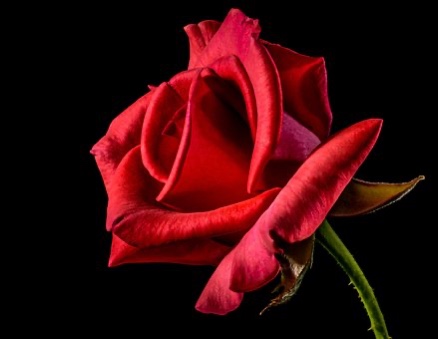
Furthermore, it is quite interesting to note how many would consider it a common understanding that it takes effort to plant a seed and foster its growth. Sometimes we hear people say that someone has a “green thumb,” meaning that they excel in making things grow and keeping them alive. However, it is the effort and care that these individuals put forth to produce a desired outcome. A plant requires a space to grow, ideal temperature, light, water, oxygen, nutrients, and time. This individual is willing to sacrifice to some extent to provide all of this for the plant to grow and stay healthy. Yet, for some reason there is an unrealistic expectation in our society that true love just exists, that it is a mere feeling that needs no attention, no care, and no time. This is as unrealistic as placing a seed on cement without providing anything else and expecting it to flourish into a beautiful rose bush.
Infatuation is not true love. Infatuation is an intense feeling of attraction toward a person. It is based on superficial qualities, the way someone looks, their accent, their abilities, or skills. Infatuation is a deep sense of passion that can well up very quickly, even after a single encounter with the individual that one is attracted to. The infatuated person tends to be overwhelmed by positive thoughts and feelings that are often based on their own imagination enhancing the encounter, adding insights about the suitableness of the person of their attraction that are not necessarily rooted in reality, but rather in hopes and wishes. The intensity of this feeling is often matched by its brevity. The infatuated finds themselves soon wondering, as time passes, shortcomings become more evident, or a sexual encounter disappoints, why they felt so strongly in the first place.
Yet, why do we experience such feelings? Are they in anyway helpful? Steinberg (1986) proposed a triangular theory of love that is composed of intimacy (e.g., feelings of closeness, connectedness), passion (i.e., sexual momentum, infatuation), and commitment (i.e., a decision that we love someone, a decision to maintain that love or relationship). The notion of this theory is that if all three components are present, interacting equally, and they are strong, then a relationship is much more likely to be successful. While this might be an oversimplification, I do think that there is some merit to its principle. Infatuation can be a potent starter to a potentially fruitful and healthy relationship if the individual who experiences this feeling does not allow it to conquer them or convince them of an illusion, but rather contemplatively, patiently, and with self-control explores the possibility of a relationship. This means, that the infatuated person understands that these feelings of passion and attraction are fleeting and based on superficial attributes of the other person.
This understanding, coupled with self-control and discretion allows for further investigation over time whether there is a true compatibility that is based on real substance. If after thoughtful investigation the potential for a relationship is present, then the decision to do so will be based on more than infatuation or passion, but on concrete evidence of observation and interaction. The decision and commitment that would follow this process could now be based on principles that are superior to a primal instinct and could serve as a preservative factor for the relationship. The inability to balance passion, reason, and planning is very likely to result in the futile and never-ending pursuit of every feeling of infatuation only to be disappointed.